Etsy Advice I’d Ignore If I Were Starting Today (And What I’d Do Instead)
Six pieces of popular Etsy advice I’d ignore if I were starting a shop today, what I’d do instead, and the one piece of advice I’d never skip.
Growing an Etsy shop: SEO, listings, pricing and traffic.
Six pieces of popular Etsy advice I’d ignore if I were starting a shop today, what I’d do instead, and the one piece of advice I’d never skip.
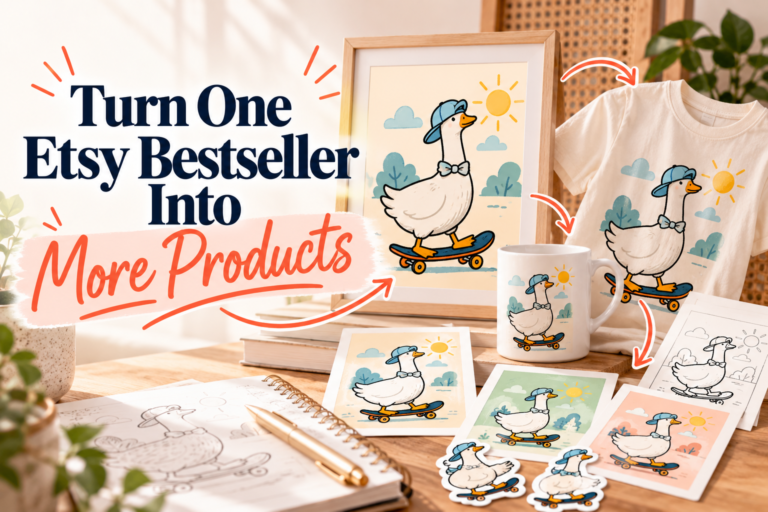
A 4-step process for scaling a design that already sells: work out why it sells, validate new ideas, then build colourways, matching sets, POD products and colouring pages from it.
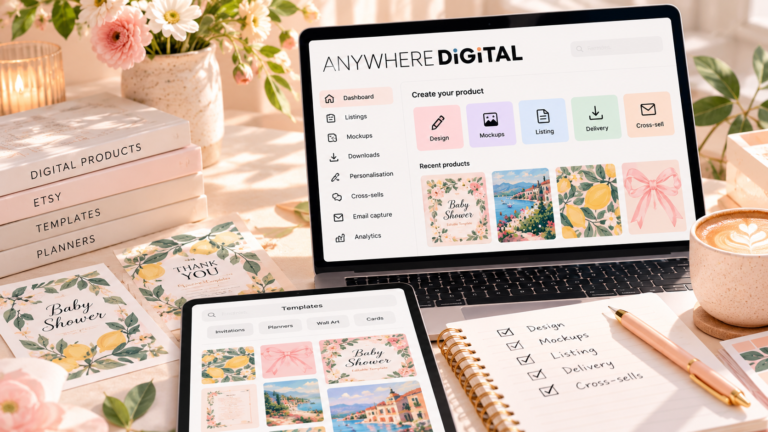
Most digital product sellers stop at delivery. Here’s how I use the download page for cross-sells, email sign-ups and personalisation, plus 5 products I’d list before Christmas.
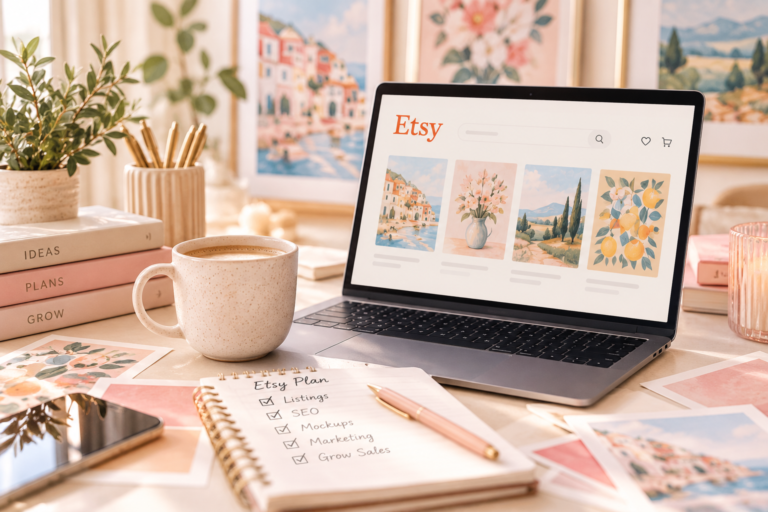
My Etsy shop sat at $1,500 a month for months. Here are the 10 things I got wrong in year one, and the changes that finally moved it to $7,880.
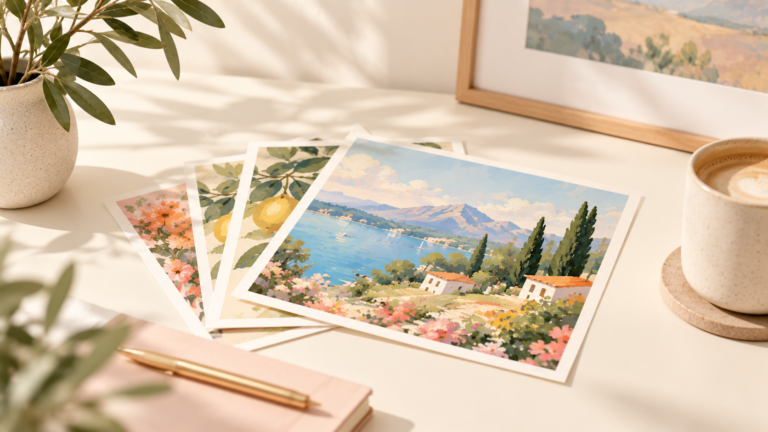
How I take AI art from Midjourney to a finished Etsy draft listing in 2 clicks with Tempest and Downpour, and the parts that still need a human.

The free traffic channels I’ve tested for my Etsy shops: Pinterest mood boards, email, buyer communities, ambient YouTube and short-form, with real numbers.
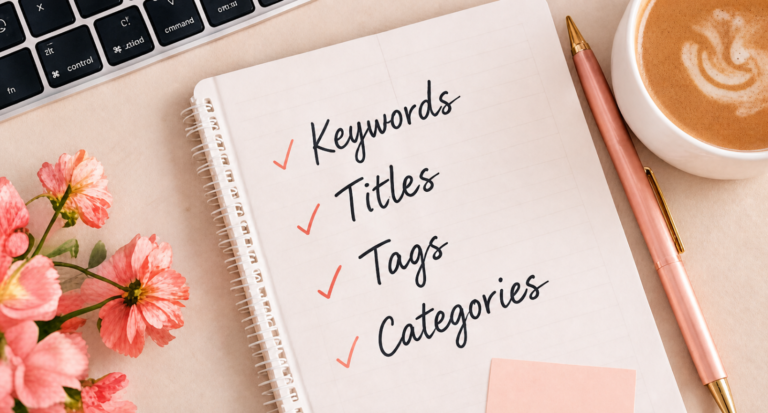
How I research keywords by buyer intent, write shorter Etsy titles, use tags and descriptions properly, and where I still edit AI’s SEO by hand.

No views, no clicks or no sales? Each is a different leak with a different fix. Here’s how to diagnose yours, using my own shop’s traffic data.

Etsy fees, one-time costs and three tool budgets ($0, $50 and ~$200/month) from someone running two AI art shops, plus what month one really costs.

My research process for AI wall art: spot a trend upstream on Pinterest, validate it with Etsy data, build a mood board, then prompt. Real example.