Etsy Advice I’d Ignore If I Were Starting Today (And What I’d Do Instead)

Six pieces of popular Etsy advice I’d ignore if I were starting a shop today, what I’d do instead, and the one piece of advice I’d never skip.
If you’ve started looking into selling on Etsy, you’ve probably noticed that everyone has advice. List a hundred products. Copy what’s selling. Lower your prices. Stuff your titles with keywords.
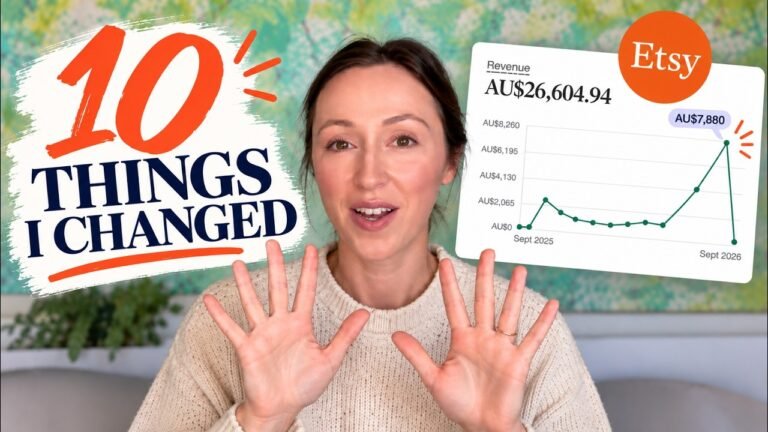
I made over $46K on Etsy in my first year as a brand-new seller. And looking back, some of the most popular advice I heard along the way either slowed me down, or would have if I’d followed it. Not because it’s always wrong, but because a lot of it is built for shops with thousands of sales and years of reviews, not a shop that’s just getting started.
So here are six pieces of Etsy advice I’d ignore if I were starting today: why they sound right, when they actually are right, and what I’d do instead. Then the one piece of advice I’d never ignore, and the three questions I ask before following any Etsy advice, including mine.
1. “List as many products as you can, as fast as you can”
This is the one I hear most, and it isn’t completely wrong. More listings give you more chances to be found, new listings can get a small visibility boost when they go live, and some very big sellers do list in huge volume.
But there’s a difference between a big seller adding more products to a niche they already know sells, and a new shop uploading a hundred unrelated things to see what happens. The second one mostly gets you a lot of listing fees. Every listing costs US$0.20 and renews every four months, or when it sells.
I learnt this the hard way. At one point I had over a thousand listings, and only somewhere between twenty and fifty of them were actually selling (I wrote about that in the 10 things I got wrong in my first year). I do list in volume now, but only once I know which styles sell.
Do this instead: start with 10 to 20 products that clearly belong together. Watch which ones get views and favourites, then add more of what’s working, consistently. Grow into the volume.
2. “Sell a bit of everything and see what sticks”
This usually comes from a good place. You don’t know what will sell yet, so why not test lots of things? You’ll also hear the opposite: that you need the perfect niche before you start. I don’t think you need the perfect niche. But I don’t think a bit of everything works either.
When someone likes one of your listings and clicks through to your shop, they’re hoping to find more like it. If the next thing is completely different, you’ve lost them.
Do this instead: test, but test inside one direction. One kind of buyer, one style, a few variations. You’ll still learn something useful, and your shop will make sense to the person browsing it.
3. “Just copy what’s already selling”
The logic is that if something’s selling, there’s proven demand, and demand really is worth paying attention to.
But if you make the same thing as the shop that’s already selling it, you’re now the newer, less-reviewed version of something buyers can already get. Copy too closely and you can also run into intellectual property problems, and Etsy can take listings down.
Do this instead: use a bestseller as a clue, not a template. Ask three things:
- Who is this for?
- What do the reviews say buyers love?
- What might that same buyer still be missing, like a different style, a different room or a different occasion?
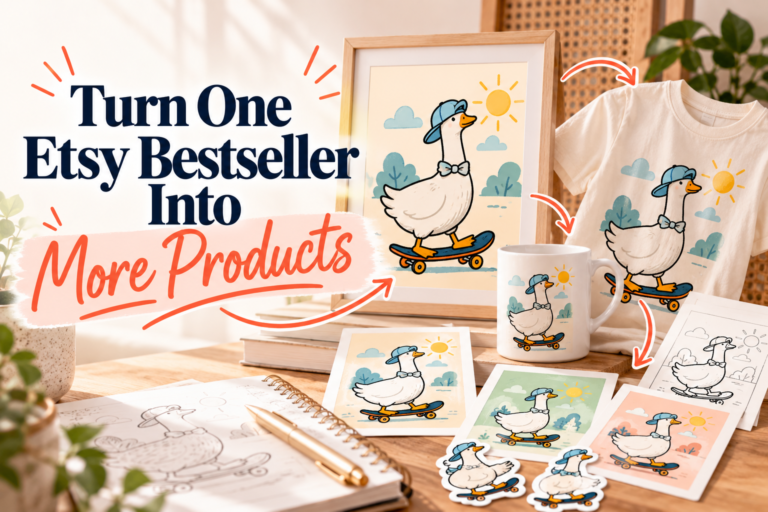
If you want a head start, my free bestseller prompts include the Claude prompt I use to work out why a listing sells and what to make next. I walk through the whole process in how to turn one Etsy bestseller into more products.
4. “Put every keyword you can into your title”
You’ve probably seen titles that are just a wall of search terms. The idea is that more keywords means showing up in more searches.
But Etsy’s own guidance has moved the other way. They now recommend shorter, clearer titles that a buyer can actually read. That doesn’t mean keywords don’t matter: Etsy still uses the words in your title to match searches.
Do this instead: put the most important phrase first, say what it is and who it’s for, keep it short, and let your tags carry the extra variations. And if a listing is already selling well, don’t rush to rewrite it. Test new titles on the listings that aren’t working first. My full process is in how to write Etsy titles and tags.
5. “If it’s not selling, lower your price”
This is probably the most common advice for a shop that’s struggling, and sometimes price really is the problem. But it’s usually the first thing people try, when it’s often not what’s wrong. Your Etsy Stats can tell you which problem you’ve actually got:
- Hardly any views: price isn’t the issue, because people haven’t seen it yet. That’s a visibility problem.
- Views but very few favourites: people are seeing it and scrolling past. That’s usually the product or the main photo.
- Favourites but no sales: people like it, but something’s stopping them. This is where price might be the problem, along with how clear the listing is about what they’re getting.
And if you do lower your prices, it’s hard to go back up.
Do this instead: check your stats before you touch your prices, and price with room to run a sale later rather than starting at the bottom. (More on this in Etsy shop not selling? It’s probably not your SEO.)
6. “Etsy is all you need”
Etsy is brilliant for getting started. The buyers are already there, and you don’t need a website or a following. So it’s easy to assume Etsy is the whole business.
But you don’t own anything on Etsy. Not your shop, not your search ranking, not your customers’ contact details. Search changes, fees change, and shops do sometimes get closed. If all your sales come from one platform, so does all your risk.
Do this instead: don’t leave Etsy, and don’t try to be everywhere at once. Just start building one thing of your own alongside it, like a simple email list or a Pinterest account. Sending your own traffic to Etsy can help your listings too. Here’s how I get free traffic to my Etsy shop without paying for ads.
The one piece of Etsy advice I’d never ignore
Understand the space you’re selling in.
If you go in blind, without looking at your competitors, the top listings, or what your buyer is actually choosing between, you’re guessing at what to make, what to charge and what your photos need to look like.
So before you list anything, spend some time in your niche as a buyer:
- Search the way your customer would.
- Look at the top listings: what they sell, what they charge and how their photos look.
- Read the reviews, because that’s where buyers tell you exactly what they love and what they wish was different.
My process for this is in how I find AI art to sell on Etsy before it’s saturated, and it works for any niche.
3 questions to ask before you follow any Etsy advice
You’ll keep hearing conflicting advice, including from me. So here’s how I decide what to follow.
1. Who is this advice for? Advice from a seller with hundreds of thousands of sales and a proven niche might be exactly right for them, and wrong for a shop with ten listings and no reviews.
2. What’s it based on? Is it their own results, data, or Etsy’s own guidance? Or is it repeated because everyone says it?
3. What does it cost me if it’s wrong? Testing a new title costs nothing. Uploading two hundred listings or dropping all your prices costs a lot more. The higher the cost, the more sure I want to be before I do it.
If a piece of advice passes all three, try it. If it doesn’t, it’s fine to ignore it, even if everyone else is doing it.
You’ll find my free Etsy guides and resources here, and every tool I use for research, design and selling is on my tools page.
FAQs
How many listings should a new Etsy shop start with?
I’d start with 10 to 20 products that clearly belong together, then add more of whatever gets views, favourites and sales. Volume works better once you know what sells.
Should I lower my prices if my Etsy shop isn’t selling?
Not before you check your stats. Few views is a visibility problem, views without favourites is usually the product or photo, and favourites without sales is where price might be the issue.
Is it OK to copy what’s selling on Etsy?
Use bestsellers as research, not a template. Copying too closely makes you the newer, less-reviewed option and can lead to intellectual property issues. Find what the buyer loves and what they’re still missing.
How long should Etsy titles be?
Etsy recommends shorter, clearer titles that are easy to read. Put your most important phrase first and let your tags cover the extra variations.
Do I need more than Etsy to run a successful shop?
You don’t need to leave Etsy, but building one thing you own alongside it, like an email list or Pinterest, protects you if search or fees change.