10 Ways to Make Money Online Without Showing Your Face

10 faceless online income streams for 2027, from Etsy digital products to POD, KDP and email, with an honest take on who each one suits and how to start.
If you want to earn from home without dancing on TikTok, cold-calling anyone or being “on” all the time, this is for you. These are 10 realistic ways to make money online without showing your face, with my honest take on each.
Just over a year ago I had an 8-week-old baby and a toddler at home and wanted to supplement my income on parental leave. I didn’t have time to film myself with kids running around my feet. I needed something I could build quietly in the gaps, when the kids were asleep.
I tried a lot of things. Some worked, some didn’t. Today my main business is AI-generated art on Etsy, alongside print on demand and my own digital guides, all built without showing my face. Several of the streams below I run myself. The rest I’ve researched closely.
I’ve also put all 10, with a reality check and quick score for each, into a free cheat sheet so you don’t have to take notes.
Before you choose: three filters
Not all 10 will suit you, and they shouldn’t. Filter by:
- Skills and interests. Love design? Lean towards product streams. Love explaining things? You’ll probably land on the YouTube side.
- Time. How much you have, and how soon you need income.
- Your unique edge. The one most people skip: what do you know, have or have access to that others don’t?
1. Expand your Etsy digital products
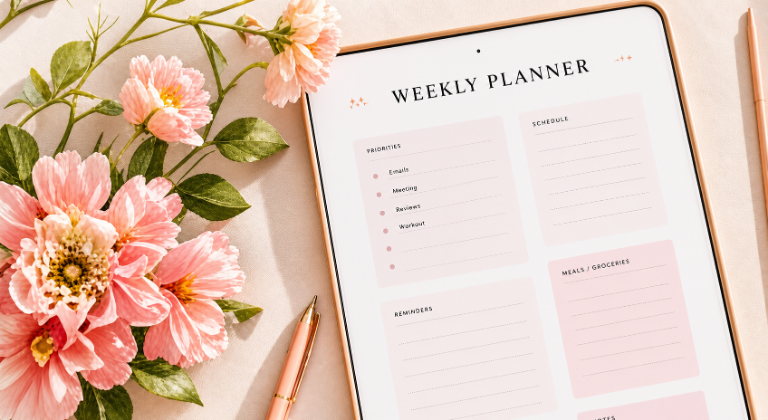
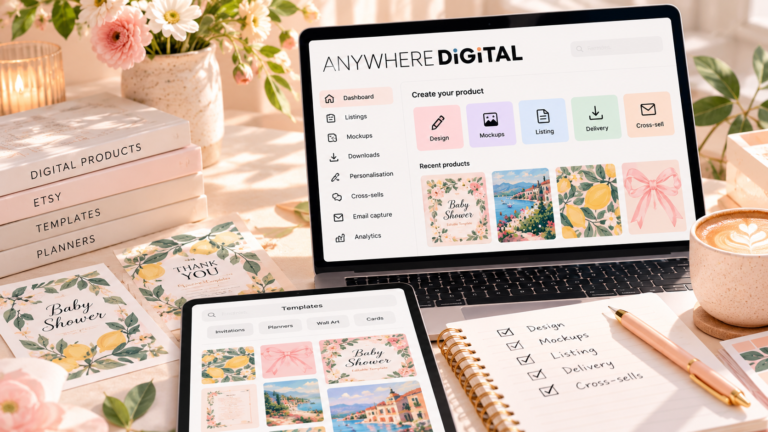
If you already sell on Etsy, this is the natural next step. Add products like junk journals, SVGs, editable invitations or planners. You already know the platform, the fees and probably the customers.
Start by looking at what your customers already buy. If they shop nursery printables, the next step might be first birthday or party decorations for that same buyer. The aim is to build your next bestseller for your existing audience, not chase a new trend or a new customer.
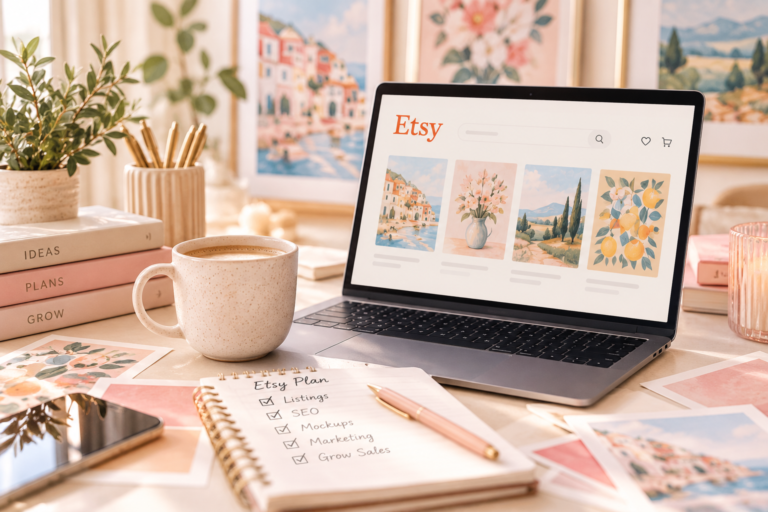
If you haven’t started on Etsy yet, I explain the digital product that made me $35K and what it costs to start.
2. Print on demand
Put your designs on framed prints, posters, apparel or mugs. When someone orders, your supplier prints and ships it straight to them. I run two POD stores alongside my AI art stores and reuse some of my artwork across products, so I can say it’s a great way to extend designs you already have.
The catch is margins. They’re slimmer than digital, because you’re paying for the product and shipping.
How to start: order samples and check quality, learn the print specs, and pick best sellers from your existing artwork that would work on other products. You may need to tweak them.
Niches that suit POD: hobby posters (golf course maps, fishing lure prints), dog breed totes and mugs, bookish apparel for book clubs.
3. Amazon KDP
Planners, journals, colouring books or, for deeper topics, ebooks. Amazon prints on demand and ships to the customer, and you earn a royalty per copy.
Honestly, research this one first. You need a good, underserved niche to cut through. Generic ideas like a dinosaur colouring book are crowded. For what it’s worth, KDP has made me around $329 so far, so I’m not overselling it.
Niches with real buyers: reading journals for book lovers, garden planners and logbooks, large-print puzzle books for seniors. Specific, giftable and far less crowded.
4. Your own digital store
Platforms like Payhip, Stan or Shopify. This one answers the diversification question: no one can delist your own shop, but Etsy can close yours. The trade-off is that there’s no built-in traffic. You’re solely responsible for bringing buyers in.
How to start: don’t move your whole Etsy catalogue across. Start with a few curated items, like your best sellers.
What sells well direct: exclusive seasonal art bundles for your email list, a teacher resource pack, or a complete printable planner set bigger than anything on Etsy.
5. Affiliate marketing
You earn a commission when someone buys through a link you’ve shared. It’s part of how I earn from my YouTube channel: I talk about tools I use, people try them, and if they stay, the platform pays me a share.
How to start: list the tools and products you love, check which have affiliate programs, and sign up to three to five.
Niches that pair well: tools for Etsy sellers (research, mockups), crafting machines and supplies, home office gear for people working around their kids. You can see the tools I recommend on my tools page.
6. Faceless YouTube
Yes, I’m aware I show my face on my channel. That’s not what this is. Think ambient art videos, screen-recorded tutorials or voiceover explainers.
Pick a subject you’re excited enough to talk about for a long time. Find five YouTubers doing it well, watch them and study how they talk to their audience.
Ideas: Canva tutorials on new features if you’re good at Canva. I also spotted, through a Reddit forum, people building big audiences talking about cold case theories. That kind of come-back-for-more content is how channels get monetised fastest.
I use ambient videos for my own art. One got nearly 39,000 views; I explain how in how I get free traffic to Etsy.
7. A Pinterest-first blog
Blogging can sound outdated. The classic model (rank on Google, earn from display ads) has taken a big hit, because Google now answers a lot of questions at the top of the page.
The version I mean is a Pinterest-first blog that earns through affiliate links, your own products and email sign-ups, not ads. For every post, make three to five pins, watch what resonates and keep pinning. Because Pinterest behaves like a search engine, those pins keep sending traffic for a long time.
Topics that do well on Pinterest: gallery wall styling guides, nursery decor ideas, printable party planners, budget-friendly home refreshes. They’re visual and searched year-round.
8. Email newsletter
If you take one thing from this list, make it this: email is the one thing no platform can take away from you.
Even small newsletters can charge for sponsored placements, so your list can earn early, on top of affiliates. Pick a clear promise, like weekly toddler and school-age recipe ideas, weekly tips for Etsy sellers, or home inspiration.
9. Teach what you know
If people keep asking you for advice on something, that’s what you could teach. My theory: you only need to be one step ahead of someone to have something useful to say.
How to start: go small, with a low-priced guide. Write down every question people ask you and everything you know about the topic, then put it into Claude with the problem you’re solving. It can shape it into a guide or checklist, and even help with design.
Ideas: a prompt pack for a specific art style, Etsy listing templates, a beginner’s gardening guide. Keep it small, specific and based on something you’ve done.
10. Services for other sellers
This one rarely makes these lists, but it’s the fastest dollar of the 10. Offer what busy sellers don’t have time for: Pinterest setup and management, rewriting Etsy listings, sourcing or creating mockups, image sourcing for websites, or handling customer messages as a virtual assistant.
The big caveat is that it trades your time for money. Treat it as a bridge, not the destination. Document how you deliver it, because a lot of good digital products start as a service someone paid for.
How to choose yours
- Do you already have a library of art or designs? Start by expanding what you sell (1), or try POD (2) or KDP (3). Your existing work can earn in a new place next month.
- Do you have an audience, even a small one? Look at your own store (4), affiliates (5) and email (8). If not, build one first with faceless YouTube (6) or a Pinterest blog (7).
- Do you need income soon? Start with services (10) while building something slower in the background.
And the number one rule: please don’t start all 10. You’ll burn out fast. Build one anchor stream, add small streams that feed it, and give it 90 days before adding anything else.
If you’ve picked a stream and want the step-by-step, my Income Expansion Playbook covers how to start each one, which traffic sources feed it, each platform’s rules for 2027 and a 90-day plan. Not ready for that? Grab the free cheat sheet.
FAQs
How can I make money online without showing my face?
Options include Etsy digital products, print on demand, Amazon KDP, your own digital store, affiliate marketing, faceless YouTube, a Pinterest-first blog, an email newsletter, selling guides or templates, and offering services to other sellers.
What’s the fastest way to make money online?
Of these 10, services for other sellers usually pay soonest. It trades time for money, so I’d use it as a bridge while building something more scalable.
Is Amazon KDP worth it in 2027?
Only with a well-researched, underserved niche. Generic books are crowded. My own KDP results have been small (around $329).
Is blogging still worth it?
The Google-plus-display-ads model has been hit hard. A Pinterest-first blog that earns from affiliates, your own products and email sign-ups is the version I’d build.
How many income streams should I start with?
One. Build an anchor stream, add small streams that feed it, and give it 90 days before you add anything new.