The Digital Product That Made Me $35K on Etsy (And It’s Still Selling)

The one digital product category behind $35,734 across two Etsy shops, why it’s easy to start, real bestseller data and how I’d begin today.
Some links in this post are affiliate links. If you buy through them I may earn a small commission at no extra cost to you.
After I shared that I’d made over $50,000 on Etsy in 10 months, the most common question was simple: what are you actually selling?
Here’s the full answer. Two of my stores sell digital products in one very specific category. Combined, that category has made over $35,000 ($35,734 across 5,000+ orders). And in the month I filmed this, it brought in around $7,000. It’s not a one-off. It’s still working.
What it is: AI-generated wall art
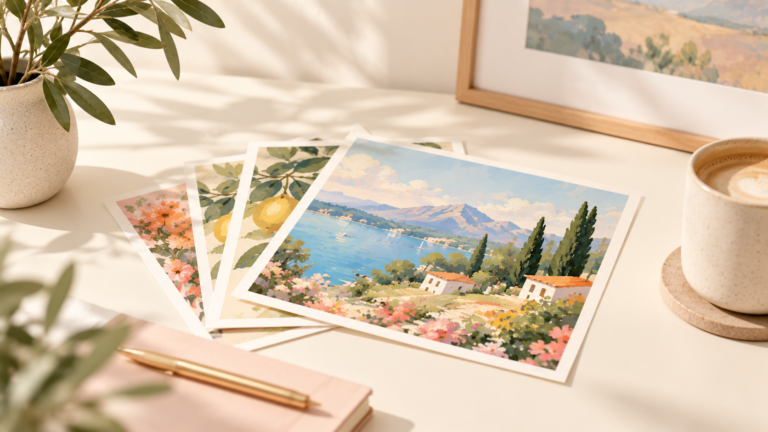
The product is AI-generated artwork, specifically printable wall art and Frame TV art, delivered as a digital download. No shipping, no inventory, no printing. The file goes straight to the customer the moment they buy.
One thing I want to be upfront about: I don’t show my stores or my exact products. Not because the numbers aren’t real, but because things get copied once they’re on the internet, and that ruins it for everyone. I’d rather show you the real numbers and the real process.
For context, I started building these Etsy businesses at home with two little kids and zero creative background. I’m not a guru and this isn’t a course pitch. I’m documenting what I’m doing as I go.
Why AI art solves the “what do I even make?” problem
The thing I hear constantly from people who want to start is: “I know digital products are a thing. I just don’t know what to make.”
Planners feel like they need spreadsheet skills. Templates feel like they need design software. SVGs feel like they need some technical process nobody’s explained. That overwhelm stops people before they start.
AI artwork removes most of those barriers. You don’t need a design degree. You don’t even need to be a natural artist. The skill that matters now isn’t manual artistic ability. It’s taste, curation and knowing what a buyer wants when they see it. And that’s a learnable skill.
Is the demand real?
I don’t want this to be “just trust me”, so here’s what I looked at. In Etsy’s own search data, digital products were the third most searched term on all of Etsy US, ahead of most physical product categories. That’s not casual browsing. That’s buying intent, and it’s been consistent.
You can also see it in bestsellers right now in this exact space:
- A floral set that’s sold over 200 times at $7
- A muted abstract window piece with 54 sales at nearly $13
- A nursery teddy bear set (the exact kind I started out making) with 235 sales
- A coastal wildflower print with 380 sales at under $5
- A Pride and Prejudice bundle still pulling consistent sales at $16
If you want to find opportunities like these yourself before they’re crowded, I walk through my full process in how I find AI art to sell before it’s saturated.
Quality is what lets you charge more
Just this week someone messaged asking if I’d illustrate a children’s book. I’ve never mentioned anything like that in my store. They asked because the work looks hand-illustrated. That’s the whole point: when it’s done properly, people don’t clock it as AI at all.
That quality bar connects directly to pricing. The examples above range from $4 to $16, but that’s not the ceiling. A single print of mine sells for $13 to $18, and people pay it because it doesn’t look churned out in bulk. Buyers also come back to a shop that looks considered, not thrown together. That’s part of why it scales.
This is the non-negotiable part. Quality over quantity is the single biggest thing separating sellers who make money from those flooding the market with AI art.
Why it scales: list once, sell repeatedly
A traditional artist might spend hours on one piece. With AI handling the heavy lifting on production, you can go from idea to a polished, listable piece in a fraction of the time. That means more listings, faster testing and more chances to be seen.
But the bigger part is what happens after it’s listed. Two real examples from my shops:
- One listing has made $636 from over 153 sales across about 10 months.
- Another has made over $2,000 from 85 sales, and the curve is still accelerating. I haven’t done anything extra to make that happen.
That’s what “list once, sell repeatedly” looks like in practice. Low barrier to entry plus real scalability is rare.
How I’d start today
1. Start with something you understand as a buyer
I got into this because I was the buyer. I was buying art off Etsy for my children’s rooms, so I already knew what cheap artwork looked like and what was worth paying for.
2. Don’t wait for the perfect niche
You don’t have enough data yet to know what perfect looks like. List, watch what happens, and let the real sales data tell you where to go.
3. Quality over quantity, every single time
Refine your outputs before they go anywhere near a listing. One strong piece will outsell ten average ones.
Before you jump in, it helps to know what you’ll spend. I broke down what it really costs to start an AI art Etsy shop, from a free setup to the tools I pay for.
Have I missed the window?
I don’t think so. This demand isn’t shrinking. The barrier to doing it well is still fairly high, so most people give up before they get good. That’s an opportunity, not a warning sign.
If you want the step-by-step version, my AI Art Starter Guide walks through tools, setup and costs. You can also grab my free resources, or see the tools I use on my tools page.
FAQs
What is the best digital product to sell on Etsy for beginners?
For me it’s been AI-generated wall art: printables and Frame TV art. It doesn’t need spreadsheet or design software skills, and the skill that matters most (taste and curation) can be learned.
Can you really sell AI art on Etsy?
Yes. Two of my stores sell AI-generated art and have made over $35,000 combined. The key is quality. Buyers pay for work that looks considered, not mass-produced.
How much can you charge for printable wall art?
Bestsellers I’ve seen range from under $5 to $16. My single prints sell for $13 to $18. Higher-quality, curated work supports higher prices.
Do I need art skills to sell AI art?
No design degree needed. I started with zero creative background. What you do need is an eye for what buyers want, and the patience to refine outputs instead of listing everything the AI gives you.
Is the AI art market on Etsy too saturated?
There’s a lot of low-quality AI art on Etsy. But the bar to doing it well is still high, and most people quit before they reach it. That gap is where the opportunity is.


4 Comments